
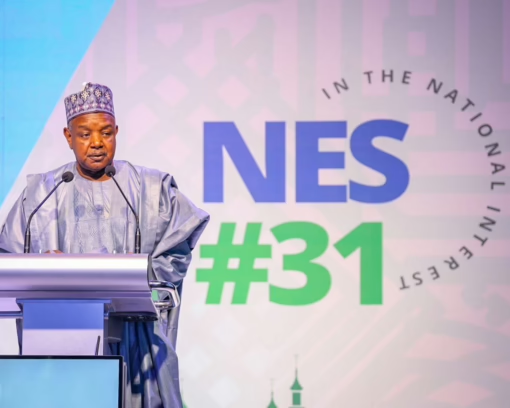
FG Reaffirms Commitment to Sustainable and Inclusive Economic Growth — Bagudu
The Federal Government has reiterated its strong commitment to advancing sustainable and inclusive economic growth, strengthening macroeconomic stability, and improving the welfare of Nigerians.
The Minister of Budget and Economic Planning, Senator Abubakar Atiku Bagudu , gave this assurance on Day One of the 31st Nigerian Economic Summit (NESG) held in Abuja, themed “The Reform Imperative: Building a Prosperous and Inclusive Nigeria by 2030.”
Senator Bagudu said the comprehensive reform agenda being implemented by the current administration is aimed at correcting structural imbalances, enhancing productivity, and positioning Nigeria for enduring prosperity.
“The results of the past two years have strengthened our confidence. While we acknowledge the temporary hardships faced by citizens, we are certain that the long-term gains of these reforms will be significant,” the Minister stated.
“The stabilization of the exchange rate, moderation in inflationary trends, and improvement in fiscal management are clear indicators of progress.”
He reaffirmed that the private sector remains central to Nigeria’s economic transformation, describing it as “the engine of growth and a strategic partner in development.”
Citing the National Development Plan (2021–2025), Bagudu noted that the private sector is projected to contribute 86 percent of total investments under the plan, reflecting government’s commitment to fostering a market-driven economy.
Highlighting the administration’s efforts, the Minister said President Bola Ahmed Tinubu’s government has implemented bold reforms to stabilize the economy, expand fiscal capacity, and tackle insecurity — in line with the Renewed Hope Agenda and its Eight Priority Areas.
“These measures were vital to avert a fiscal crisis and lay the groundwork for sustainable growth and development,” he explained.
“We are mindful of the short-term challenges these policies pose, but government remains determined to mitigate their impact and ensure shared prosperity.”
Bagudu emphasized that the administration is focused on creating a predictable policy environment that inspires investor confidence and drives private sector participation.
“We are streamlining regulatory processes, removing bureaucratic obstacles, and fostering a business climate that supports innovation, investment, and competitiveness,” he added.
The Minister highlighted key policy measures — including the Four Tax Reform Acts— designed to strengthen revenue generation, promote fiscal prudence, and ensure macroeconomic stability. He further noted that the government continues to align fiscal and monetary policies, diversify revenue sources, and channel investments into critical infrastructure such as transport, power, and the digital economy.
He also reasserted the administration’s commitment to protecting vulnerable populations, enhancing human capital through improved education and healthcare, and promoting skill development to boost national productivity.
On agriculture, Bagudu underscored its role in achieving inclusive growth, noting institutional reforms such as the creation of the Ministry of Livestock Development, funding of the National Agricultural Development Fund, recognition of Fisheries and Blue Economy potential, and the recapitalization of the Bank of Agriculture to strengthen food security and rural livelihoods.
The Nigerian Economic Summit, jointly organized by the Federal Ministry of Budget and Economic Planning and the Nigerian Economic Summit Group (NESG), remains the country’s premier platform for public-private dialogue on economic policy, reform, and national competitiveness.
Leave a Reply